


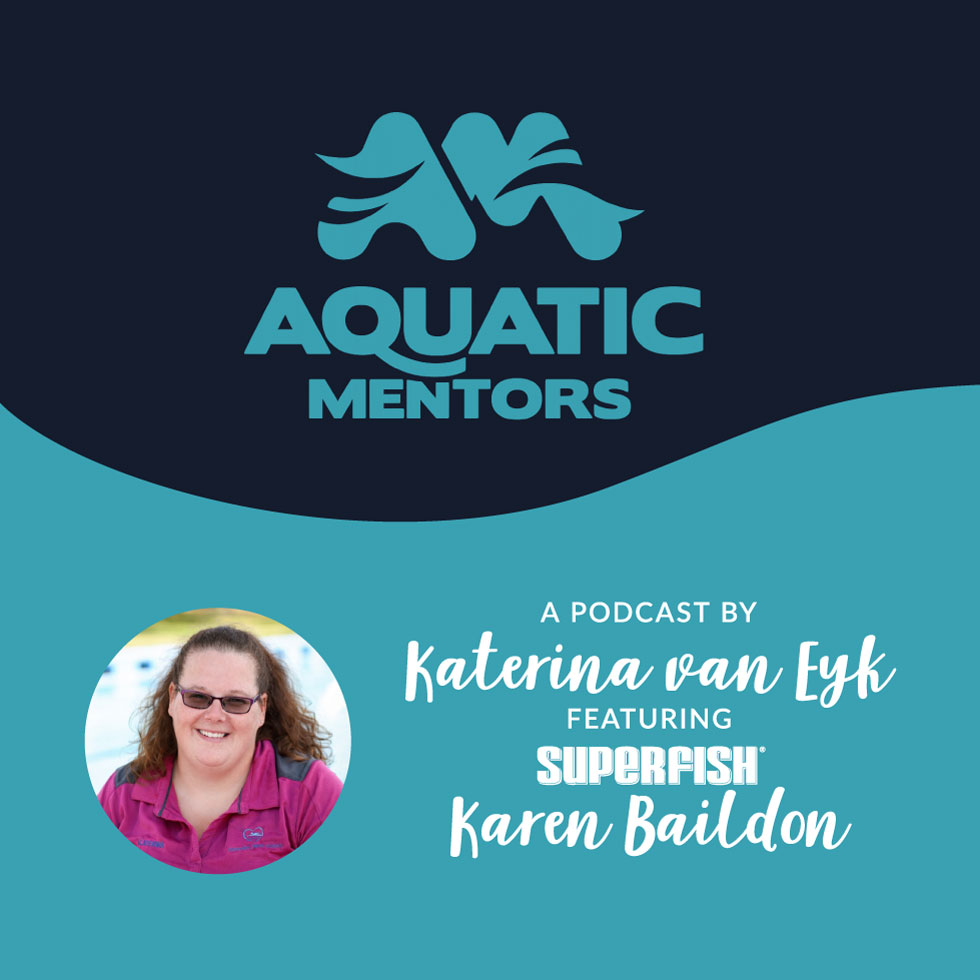

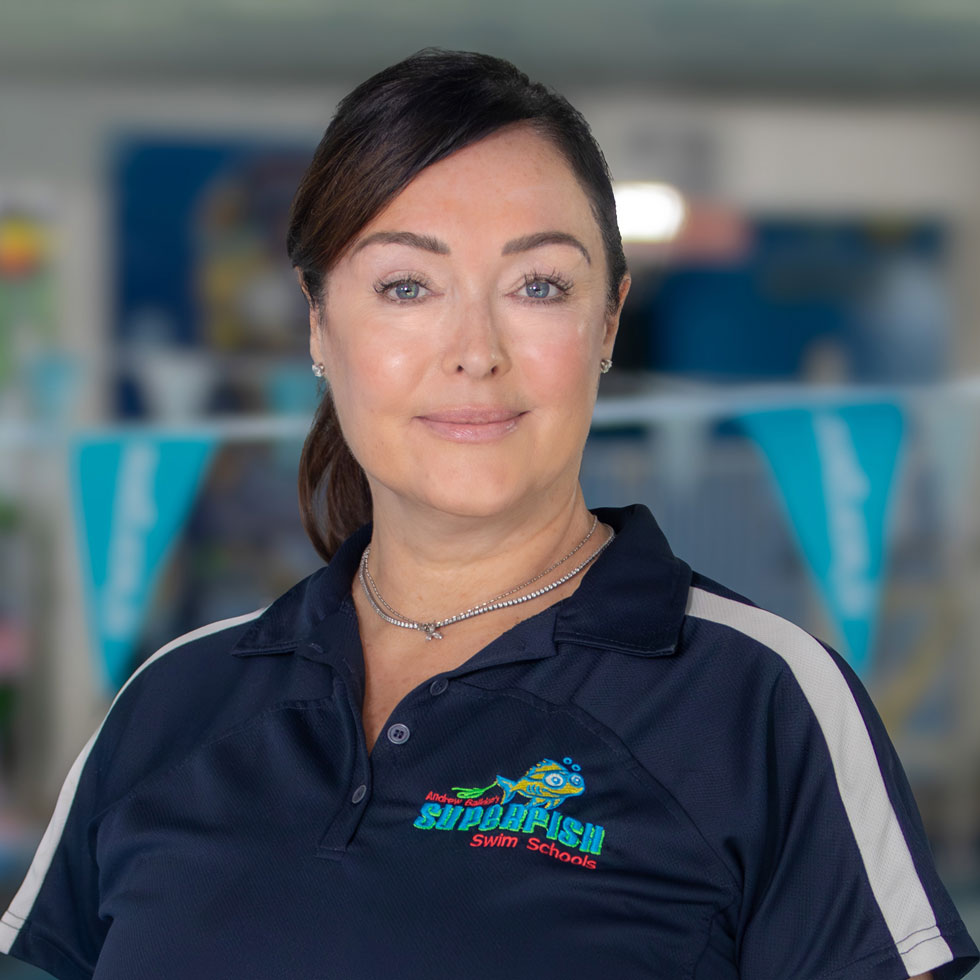
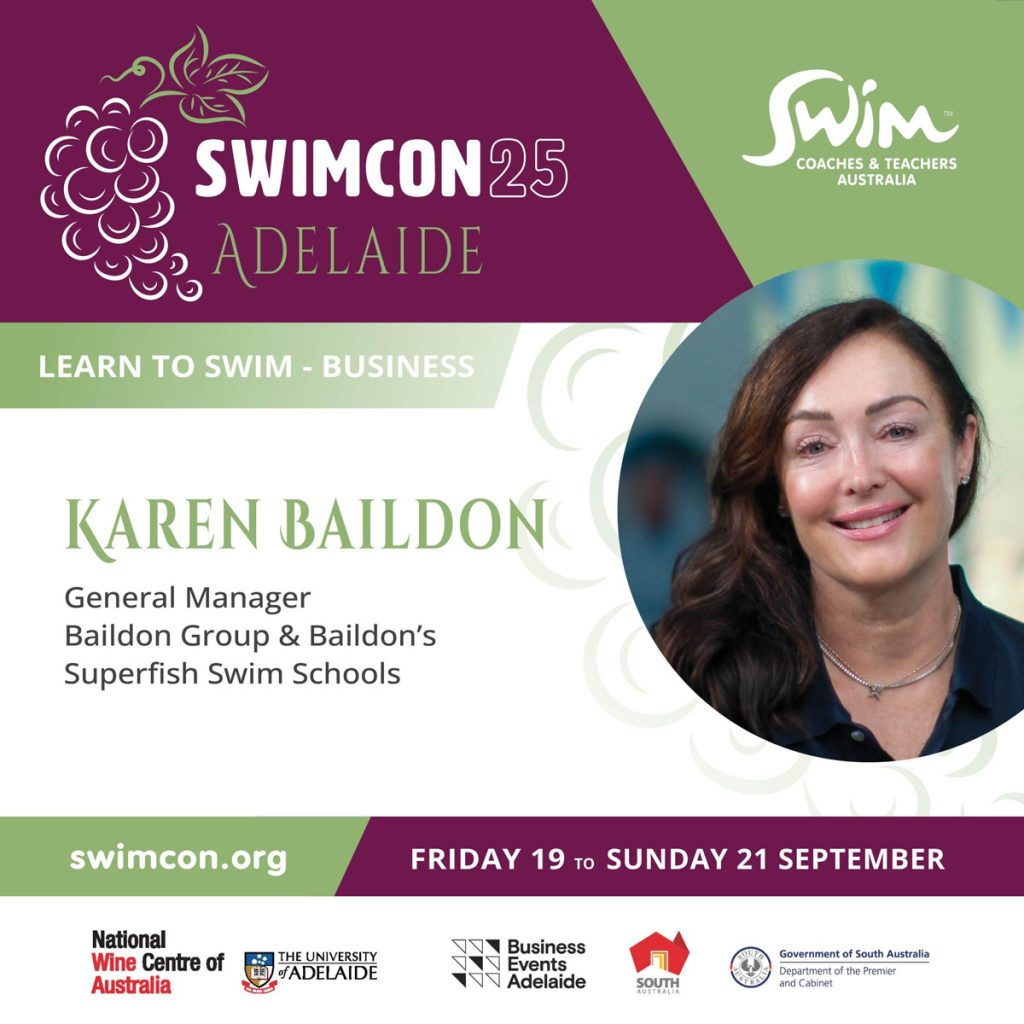
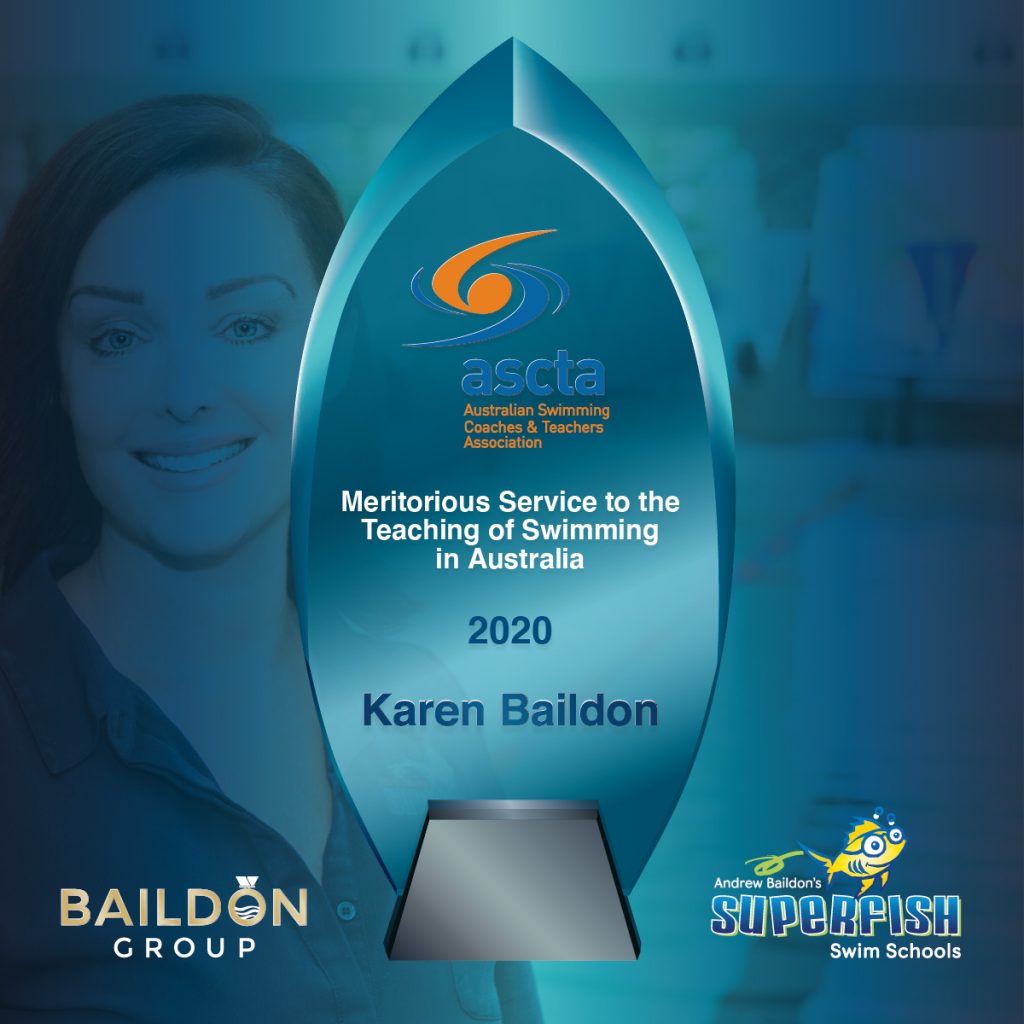


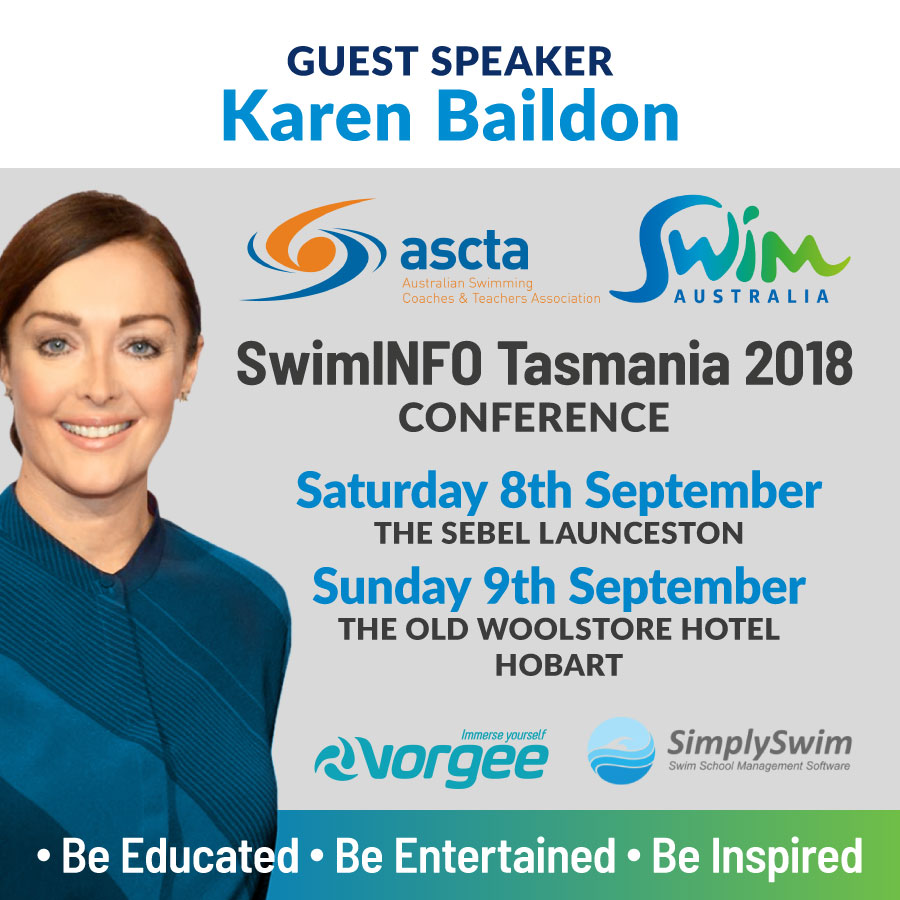
Karen Baildon has spent a lifetime immersed in the swimming industry. Raised in a family deeply connected to competitive swimming and coaching, she grew up poolside and later went on to build Superfish Swim Schools into one of Australia’s most recognised learn-to-swim brands.
In this Aquatic Mentors podcast interview with Katerina Van Eyk, Karen reflects on her early influences, the lessons she has learned through decades in the industry, and her passion for teaching babies, toddlers and young children to swim. She also shares her thoughts on coaching, water safety, grassroots development and the future of swimming in Australia.
Transcript
Katerina: Hello and welcome to another episode of the Aquatic Mentors podcast. I’m Katerina, and in this episode I interview an industry professional who has spent her whole life in the aquatic industry and has been surrounded by swimming greats since birth. My guest is the daughter of an Olympic champion and a long-time swim teacher. She was named after an Australian distance swimmer, and she’s married to another swimming legend. So please extend a big welcome to the podcast pool - Karen Baildon.
After a big health scare in 2011, Karen has had to rebuild her strength and fitness and prides herself on what she has been able to achieve. So Karen, how did you start your journey in swimming?
Karen: Well, that’s an interesting one. I suppose I was pretty much born into swimming. My dad was Australian sprint champion Michael Wenden, and he’s probably most famous for winning the 100 and 200 metre freestyle at the Mexico Olympics. He also won nine Commonwealth Games gold medals.
So I was literally, as a baby and young child, around swimming greats. My mother is also a swimming coach. I was born in Sydney, and when I was about five we moved to the Gold Coast to run the Palm Beach Olympic Pool, and that was my home throughout my childhood.
I was an age group swimmer, and during that time I met my best friend and also my husband. We were both Australian representative swimmers. We met as age groupers, reconnected after he retired, and then opened our first 18 metre swimming pool.
We were both 24 at the time, so there were plenty of trials and tribulations - lots of learning, observing and visiting other programs. Within about six to eight months, we had a waitlist for our classes. That’s really how I got into the swim industry.
Katerina: That’s amazing - being brought up with champions and having both a champion father and a coach as a mother. It sounds like you didn’t really have much choice.
Karen: I didn’t actually have a choice. With my mother as a coach, it was twice a day in the pool, every day, throughout my childhood. I was a good age group swimmer and medalled at state level, but my real passion was dance. I was a ballerina and loved everything theatrical.
I never imagined it would come full circle and that I’d end up back in the learn-to-swim industry.
Katerina: So what drew you more to ballet than swimming? Was it just wanting something different?
Karen: I was drawn to anything theatrical, and I think that’s why I love teaching babies and toddlers - I get to bring out that side of myself.
When my husband Andrew retired from competitive swimming after ten years on Australian teams, we both realised how much knowledge we had between us. We had a solid foundation to build from, and here we are 25 years later with five facilities. Our entire adult life has been in the swim industry.
Katerina: And to grow that quickly, with a waitlist within six months - you must have known you were onto something.
Karen: Yes, we did. From the beginning, we were very focused on stroke technique, and I was always very passionate about drowning prevention, especially with babies and toddlers.
Those two areas - technique and early childhood water safety - gave us a strong foundation for our program.
Katerina: You mentioned your theatrical side. Has that helped your teaching beyond working with babies?
Karen: Absolutely. I tell my team that even if you’ve had a bad day, when you come into work, you’re performing.
I compare it to airline staff - they don’t show a bad day when they’re working. It’s the same with swim teachers. When you’re teaching babies and young children, you are “on”. Those children are your focus.
It’s about bringing your personality, getting down to their level, and creating a positive experience. That’s a real skill in learn-to-swim teaching.
Katerina: What’s the biggest lesson you’ve learned in your journey?
Karen: I probably should have started with a psychology degree. About 50% of what I do is HR-related.
One of the biggest lessons is to never assume anything. Not everyone has the same values or approach as you, and sometimes that can be surprising.
I work on a 90% - 10% rule. Ninety percent of people are wonderful, but dealing with the public can be challenging. You need a thick skin and not take things personally.
At the end of the day, we’re there for the children, and that’s what matters most.
Katerina: But the good outweighs the bad?
Karen: Absolutely. The families and children make it all worthwhile.
Katerina: What’s been a highlight of your journey?
Karen: Opening our Arundel swim centre on the Gold Coast was a major highlight. It was a dream for over 15 years, with more than ten years of negotiations. The deal fell over several times, but I was determined to make it happen.
It was a huge financial risk, but I believed in it completely. That centre holds a special place for me.
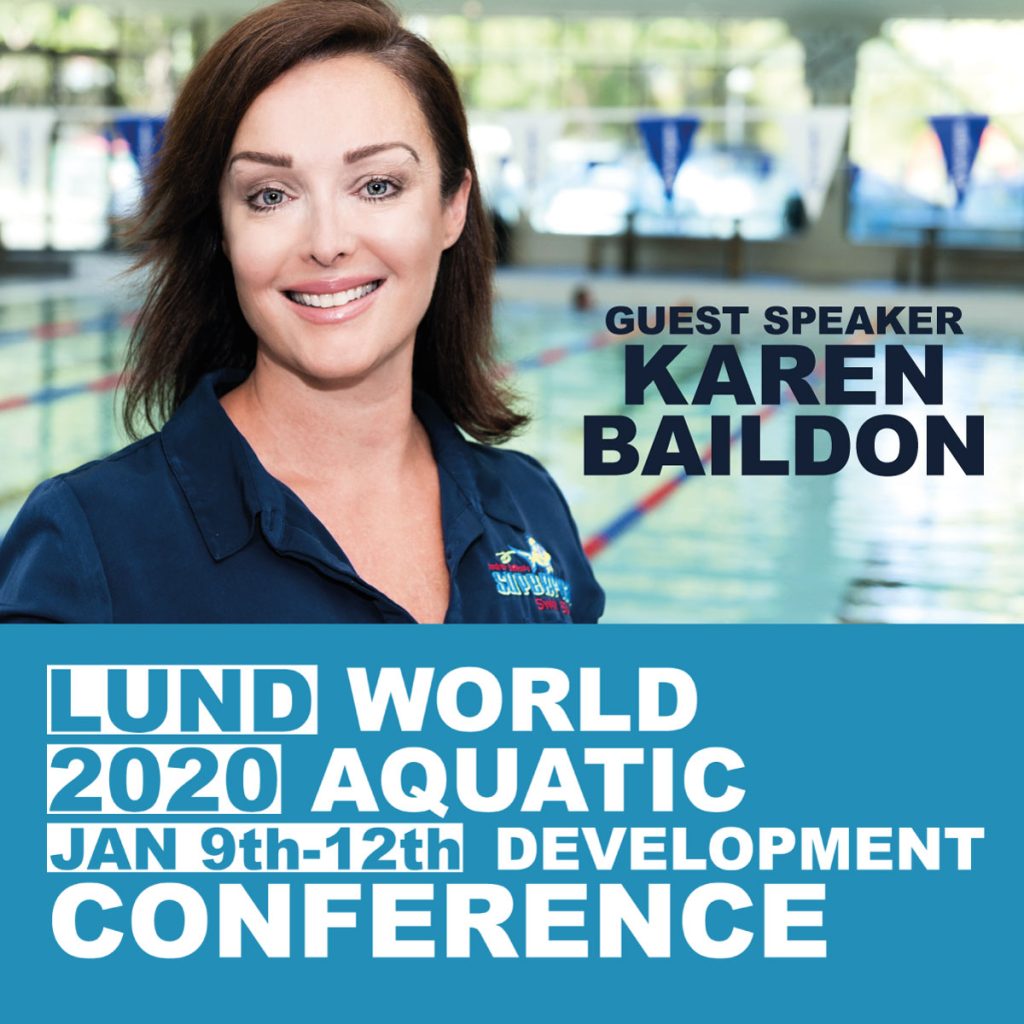
Another highlight was presenting at the World Aquatic Development Conference in Sweden. Sharing our baby and toddler program with like-minded professionals from around the world was an incredible experience.
Katerina: Does having a husband in the industry make it easier or harder to switch off?
Karen: We both bring different strengths, which works really well. But it is hard to switch off - swimming definitely dominates our lives.
Katerina: Who has influenced you the most in your career?
Karen: Denis Cotterell has been a huge influence. His knowledge of stroke technique is incredible. I could listen to him for hours.
Also Darren Lange - we’ve shared ideas and supported each other for years. Having people like that to learn from is invaluable.
Katerina: What advice would you give to new swim teachers and coaches?
Karen: Be willing to learn and leave your ego at the door. Being a great swimmer doesn’t automatically make you a great coach.
Ask questions, observe, and understand the “why” behind everything. That’s what sets great teachers apart.
Katerina: And that difference between a good and great teacher?
Karen: A good teacher can follow a lesson plan. A great teacher understands why they’re doing it and what to look for.
Katerina: What does the future of swimming look like to you?
Karen: I’m excited about the International Swimming League and how it’s making the sport more engaging.
I’d also love to see more support for grassroots swimming and swim schools. That’s where future champions are made.
Katerina: How can we improve support at that level?
Karen: We need more funding and stronger promotion of swimming as essential. Too many children still can’t swim, which is concerning.
Programs like swim vouchers help, and I’d love to see more states adopt them.
We also need to better connect elite athletes with grassroots programs to inspire young swimmers.
Katerina: That’s fantastic insight. Thank you so much for sharing your journey and knowledge.
Karen: Thank you - it’s been lovely.


